Phishing training for employees that drives real behavior change
Phishing training for employees teaches staff to recognize, report, and avoid phishing across email and other channels. Most phishing training stops at sending simulations and letting people report those simulations. Phished goes further: it extends training to the reporting of real malicious emails and coaches employees in the moment whenever they are unsure about a suspicious message. Effective phishing training drives real behavior change across the organization. It works continuously rather than as a once-a-month compliance exercise.
Last reviewed: August 2026
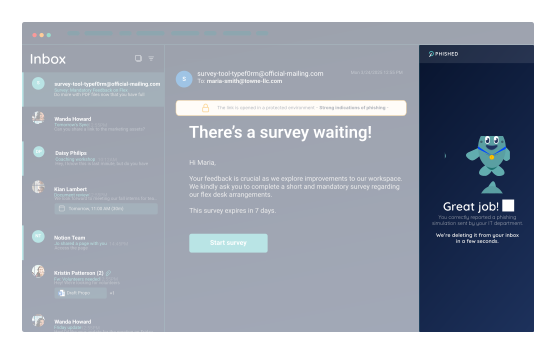
6,500 companies and 250 partners worldwide are building their human firewall

















Phishing training for employees
What is phishing training for employees?
Phishing training for employees is the practice of teaching every person in your organization to spot, ignore, and report phishing emails through realistic simulations, in-the-moment coaching, and continuous measurement. The human element is involved in the majority of breaches, and phishing remains one of the most common ways attackers get in. That makes phishing training one of the highest-ROI security controls you can run. But it only works when it changes behavior, not when it simply ticks a box once a year.
The key distinction: a phishing simulation tests behavior, while training changes it. The two only work together: simulations without training just punish employees, and training without simulations stays theoretical. Effective phishing training closes that loop: it tests, teaches in the moment, and measures whether behavior actually improves. New to the topic? Start with what phishing is.
WHY TRAINING FAILS
Why employees still fall for phishing
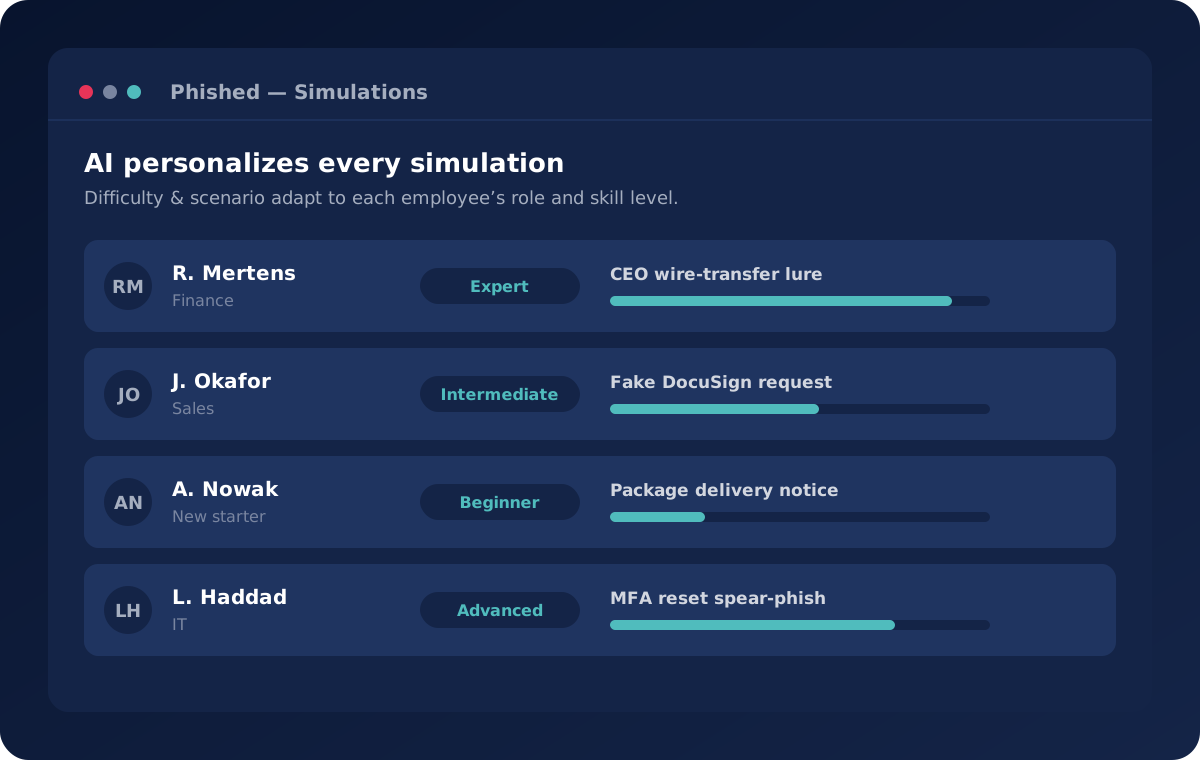
Employees still fall for phishing because traditional phishing training only reaches a small fraction of them. Most programs train only the employees who click a simulation, and a large share of those never complete the training they are assigned. Everyone who didn't click receives no training at all. This leaves the majority of your workforce untrained against real phishing attacks.
- Only employees who click a simulation receive any training, on average around 10%.
- A large share of those who do start the training never complete it.
- The remaining ~90% who don't click are never trained at all.
AI-PERSONALIZED SIMULATIONS
Phishing training tailored to every employee
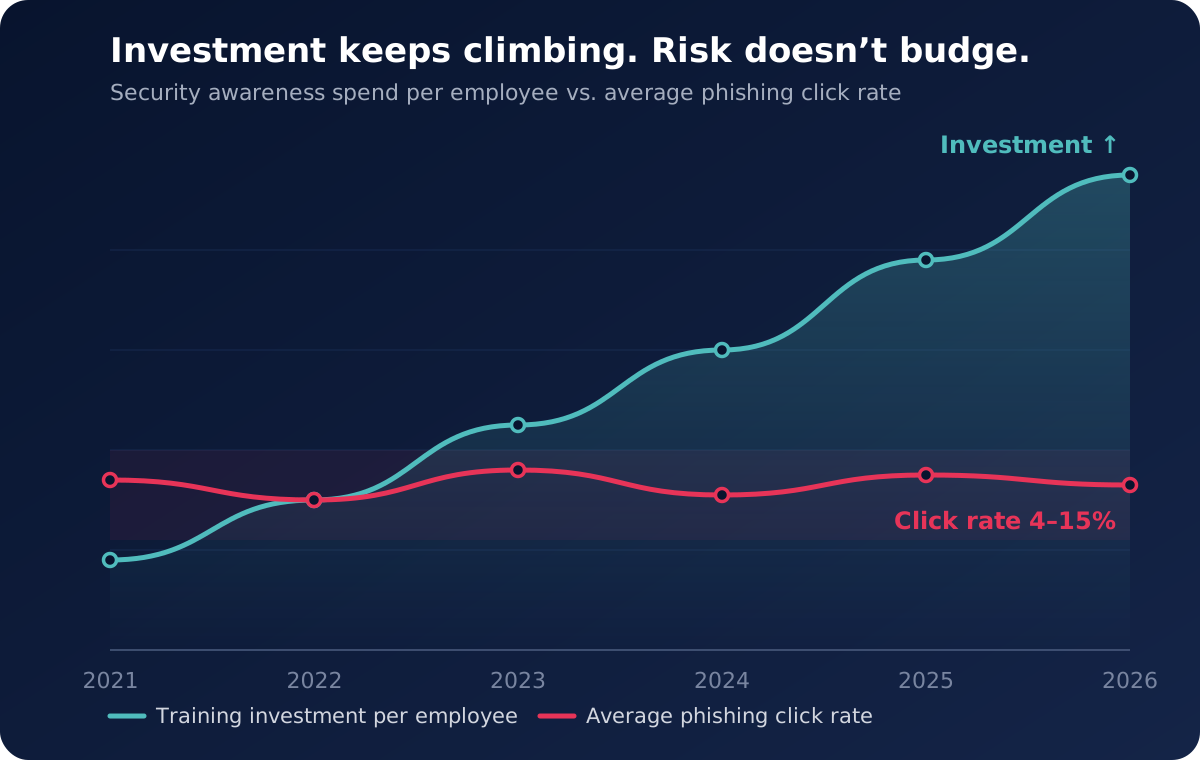
No two employees get the same test. Phished tailors every simulation to each person’s role, department, and current skill level — so finance sees finance-grade lures and a new starter isn’t hit with an expert-level attack. Difficulty adapts as people improve, keeping training realistic without being demoralizing.
IN-THE-MOMENT GUIDANCE
Coaching before the click, on real emails
The most effective phishing training happens on employees' everyday emails, the moment they are unsure, before any mistake is made. When a suspicious email arrives, the Phished Assistant lets employees Secure Before You Click: they open it safely in an isolated view that cannot reach your infrastructure, while AI flags the phishing indicators and guides their next step in real time. Employees get instant feedback when they report a real malicious email, so every interaction becomes a learning moment in the flow of their work.
ZERO INCIDENT MAIL™
Train repeat offenders safely
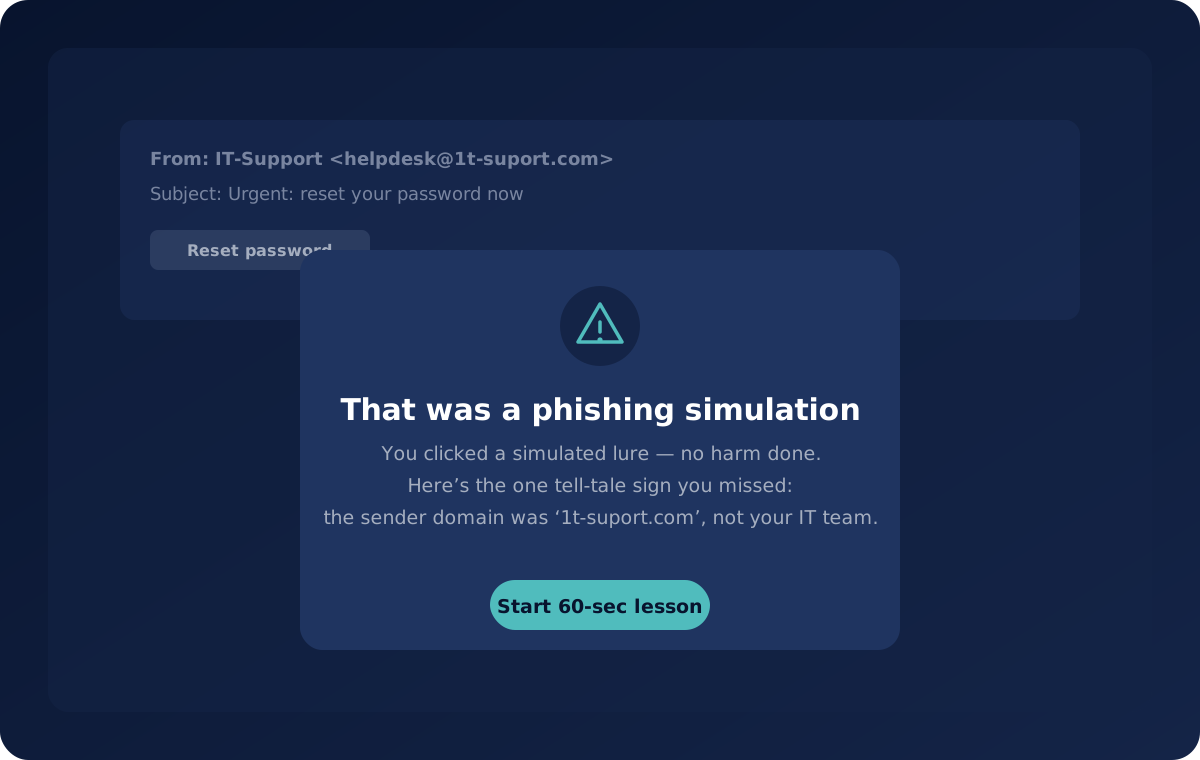
Every organization has a handful of people who click again and again. Punishing them doesn’t work. Zero Incident Mail™ (ZIM) intercepts a risky click and routes the user into a safe, contained training environment — without ever exposing your network. Repeat offenders get targeted coaching instead of blame, and the threat is neutralized. No other platform on the market has an equivalent.
THREAT ALERTS
Stay ahead of emerging attacks
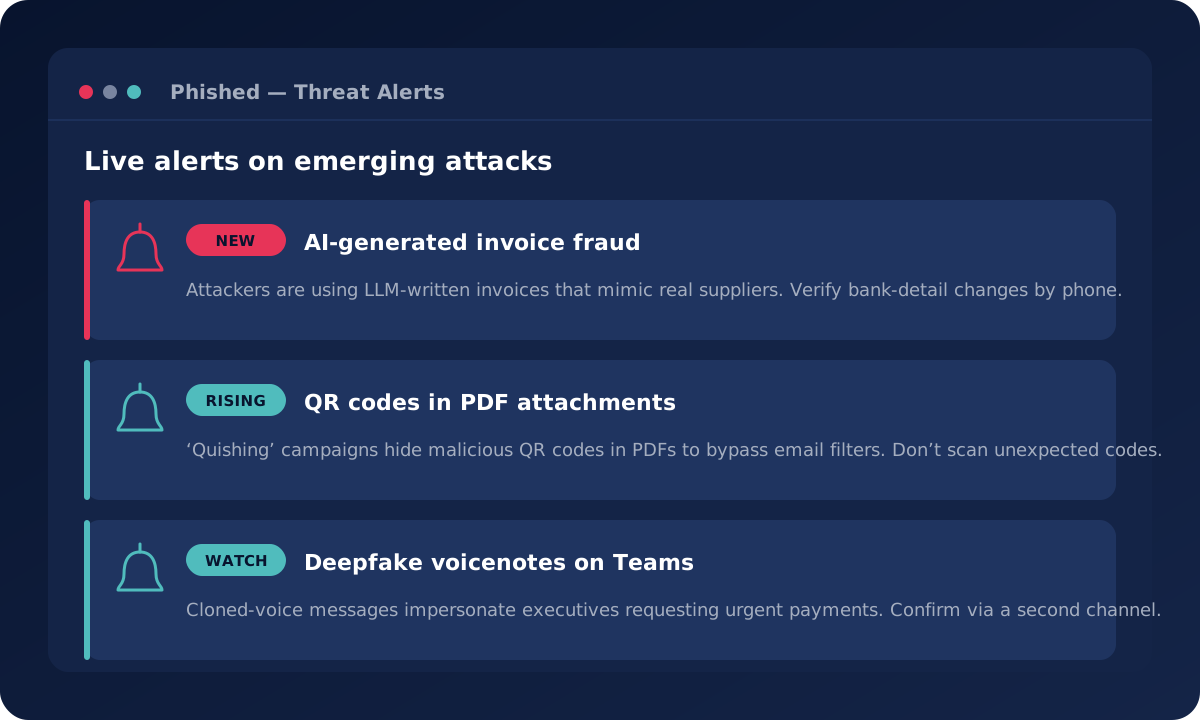
Attackers don’t wait for your next training cycle. When a new campaign — an AI-generated lure, a QR-code scam, a deepfake voicenote — starts circulating, Phished pushes a Threat Alert to your people with what to watch for. Training stays current with the real threat landscape, automatically.
THE FULL ATTACK SURFACE
Types of phishing attacks your employees will face
Email phishing
The classic: mass or targeted emails impersonating a trusted brand or colleague to steal credentials or trigger a payment. Still the most common entry point.
Spear phishing
A tailored attack aimed at one person, using real details — their name, role, manager — to feel legitimate. Far harder to spot than generic spam.
Smishing (SMS phishing)
Phishing over text message, like a fake delivery notice or bank alert with a malicious link. People trust SMS more than email, which is exactly the problem.
Vishing (voice phishing)
A phone call or voicemail impersonating IT, a supplier, or an executive to extract data or approvals. Increasingly powered by AI voice cloning.
QR-code phishing (quishing)
A malicious QR code in an email, poster, or PDF that sends the victim to a credential-harvesting page — slipping past many email filters entirely.
AI & deepfake phishing
Generative AI writes flawless lures and clones voices and faces. Deepfake video calls and audio make impersonation convincing at scale. Phished trains for these now.
BEHAVIORAL RISK SCORE™
How to measure phishing training effectiveness
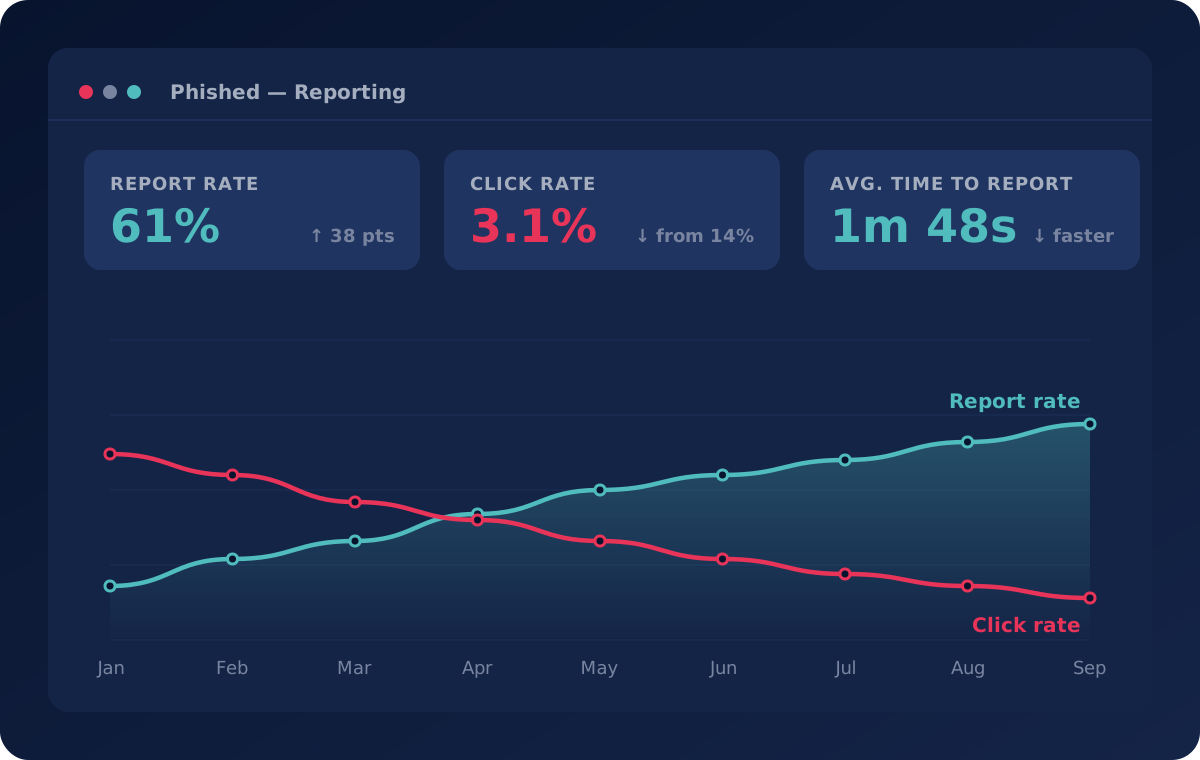
Click rate alone is a lagging indicator: it tells you who failed, not whether your organization is getting safer. The metric that matters more is report rate: the share of employees who actively flag a suspicious email. A rising report rate is a leading indicator of real vigilance.
Watch time-to-report too: the faster a real attack is flagged, the faster your security team can contain it. Phished turns these signals into clear metrics, including a Behavioral Risk Score™, so you can see risk by person, team, and organization at a glance, and prove improvement over time.
COMPLIANCE
Phishing training for employees and compliance
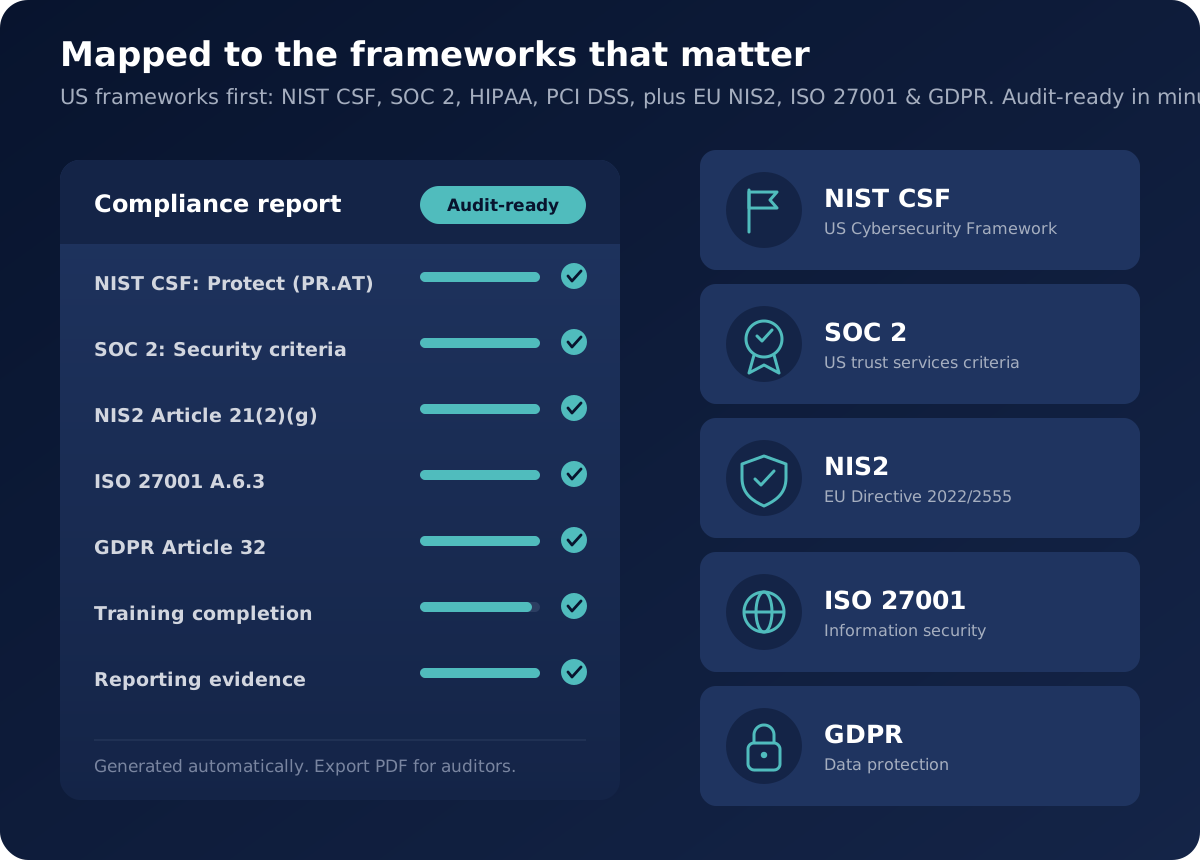
Phishing training for employees isn't just good practice, it's increasingly a compliance requirement. In the US, frameworks like NIST CSF, SOC 2, HIPAA, and PCI DSS expect organizations to run ongoing security awareness training, and it's a common control in cyber-insurance and vendor due-diligence reviews. For organizations operating in or selling into Europe, NIS2 Article 21(2)(g), GDPR Article 32, and ISO 27001 set the same expectation.
Phished maps training activity directly to these US and EU frameworks and produces audit-ready reporting, so demonstrating compliance takes minutes, not weeks.
PHISHED VS. TRADITIONAL
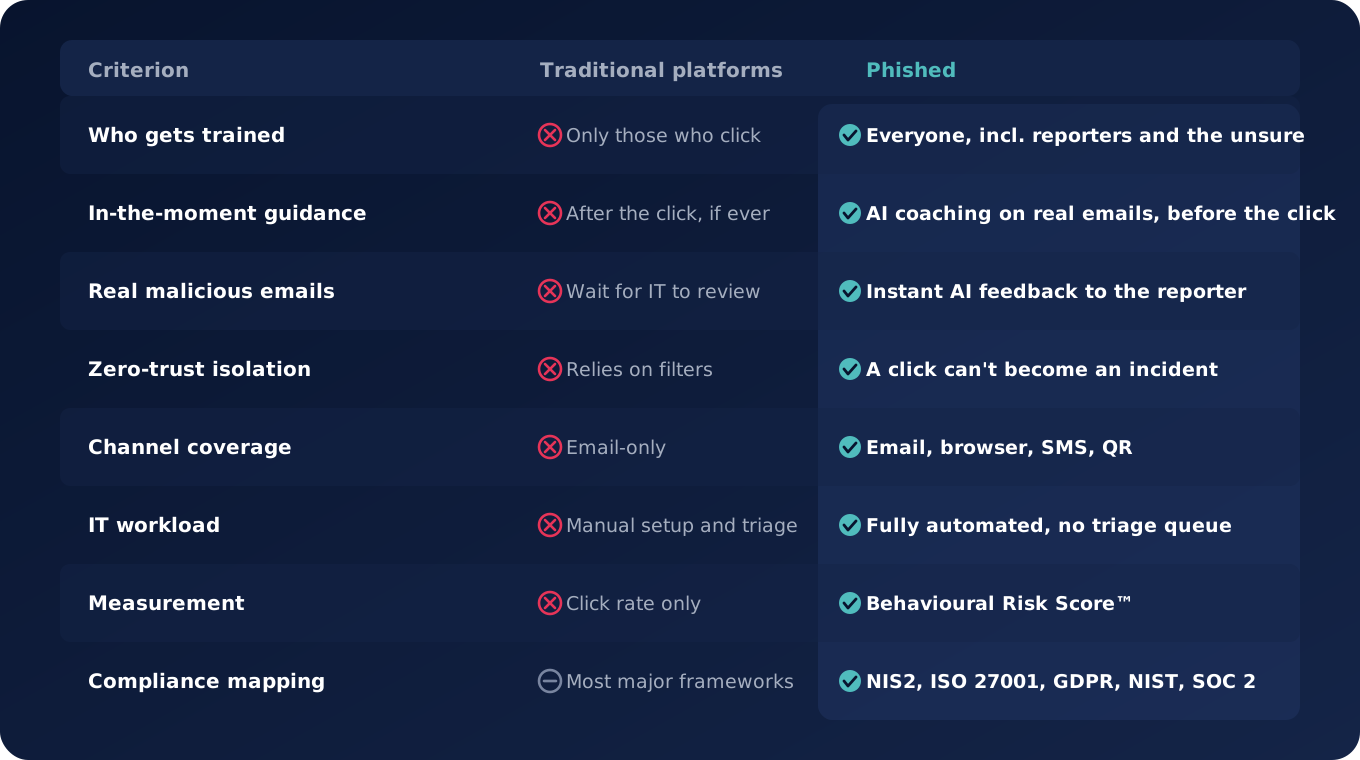
Phished vs. traditional phishing training platforms
Where continuous, personalized training pulls ahead of legacy simulate-and-report tools.
PROVEN RESULTS
Loved by the employees who use it
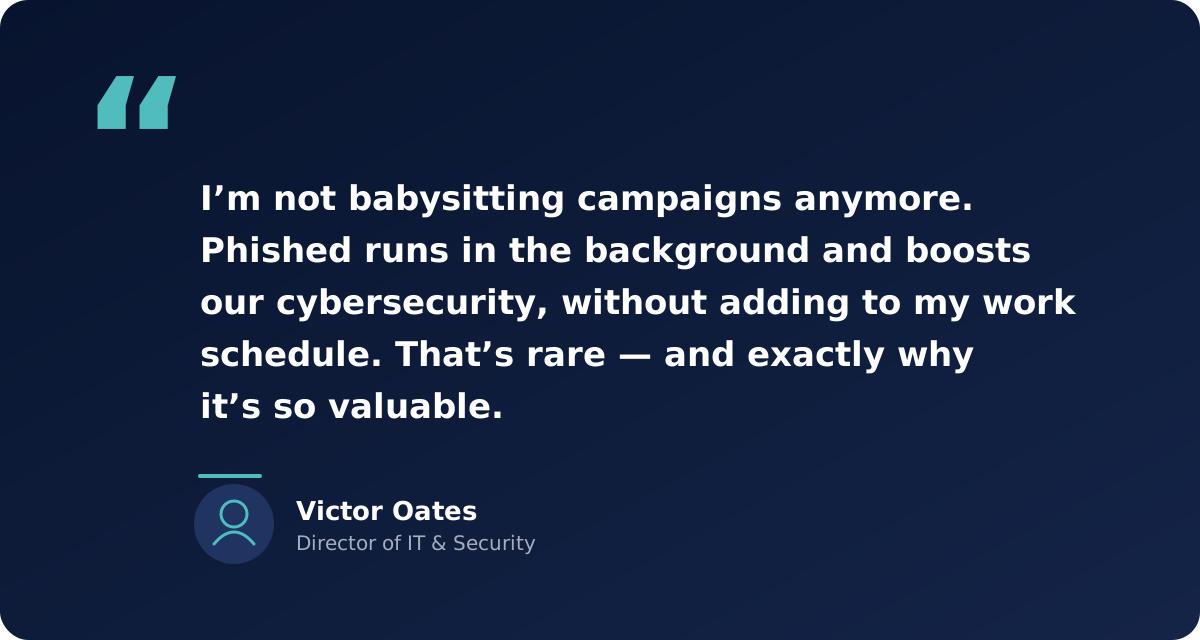
Phished customers see click rates fall dramatically over the first year as reporting behavior improves. With a user rating of 4.6 out of 5 on G2, phishing training that employees actually engage with isn’t a contradiction — it’s the point.
GETTING STARTED
Phishing training for employees: getting started
- Run a baseline. Start with a free phishing test to see your real click and report rates today — no commitment.
- Switch on automated training. Phished personalizes simulations and microlearning for every employee. Setup takes minutes; it then runs in the background.
- Track behavior change. Watch your Behavioral Risk Score™ improve and pull audit-ready compliance reports whenever you need them.
Phishing training works as a standalone program, or as part of a complete security awareness program and broader cybersecurity employee training.
FAQ
Frequently asked questions about phishing training for employees
What is phishing training for employees?
Phishing training for employees teaches every person in an organization to recognize, report, and avoid phishing across email, SMS, QR codes, and the web. The most effective approach guides and protects employees in the flow of their work, at the moment a mistake would happen, rather than only testing them with simulations.
Why isn't simulation-based phishing training enough on its own?
Simulations only train the employees who click, on average around 10%, and mostly cover email. The large majority of employees, and channels like SMS and QR codes, are left untrained. Effective phishing training adds reporting and in-the-moment guidance so it reaches everyone.
What is the Phished Assistant?
The Phished Assistant is an in-workflow tool that lets employees open any suspicious email, link, SMS, or QR code in an isolated digital silo, where real-time AI coaches them safely and nothing can reach company infrastructure. It also gives instant feedback when an employee reports a real or simulated email.
How much of the phishing attack surface does training actually cover?
Simulations alone cover roughly 2 to 3% of the attack surface. Adding a report button raises it to about 30 to 38%. Adding in-the-moment guidance like the Phished Assistant covers around 92 to 99%, including non-email channels.
How do you measure phishing training effectiveness?
The strongest measure is the report rate and a Behavioural Risk Score that tracks resilience per employee, team, and organization over time. Click rate alone is a lagging indicator, because falling click rates often mean employees got better at spotting simulations, not real threats.
How often should you run phishing training for employees?
Continuously. The most effective training happens in the moment of risk, every day, rather than as a once-a-year module, and Phished automates it so it runs without manual effort.
Is phishing training for employees required by law?
Often, yes. NIS2 Article 21(2)(g), GDPR Article 32, and ISO 27001 require it in the EU, and US frameworks such as NIST CSF and SOC 2 set the same expectation.